
Free Procedure Program Evaluation
Assess Your Risk and Readiness
The Procedure Program Evaluation is a fast, easy survey that can assess your program’s readiness for a procedure or SOP audit. This assessment gauges your program’s health against top-tier standards, helping you identify the gaps in procedure and SOP compliance, technology, and adherence.
Is Your Procedure Program in the Danger Zone?
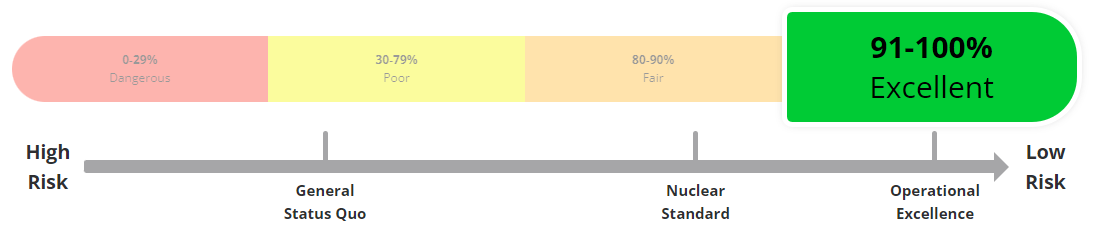
The goal of this quick assessment is to identify the specific deficiencies that jeopardize worker safety and operational performance, giving you the data needed to ensure procedure and SOP compliance and justify a strategic DPLM initiative
- The average organizational score is often below the "Poor" threshold, indicating systemic weaknesses in procedure governance.
- Inconsistent procedures and a lack of electronic enforcement expose your organization to critical audit citations.
- Without a standardized program, you cannot verify if personnel are using the most current, effective version of a procedure, directly impacting safety.
How It Works
The Procedure Program Evaluation is based on a comprehensive set of questions across seven key procedural pillars. Your score determines your program's health status and provides a metric for Digital Procedure Lifecycle Management (DPLM) maturity.
Leadership & Governance
This section measures the organizational commitment and administrative foundation supporting your procedure program. A low score here often indicates a lack of executive oversight, which is a major factor in program failure. This exposes a significant personnel gap, as subject matter experts (SMEs) are forced to perform low-value administrative tasks, increasing costs and diverting attention from safety. A successful program requires automated governance to enforce standards and control change across the enterprise without wasting valuable time or revenue.
Writer Capability & Standards
This section assesses the training, standardization, and technology support provided to the authors who create your procedure content. These factors directly reduce human error and ensure procedure and SOP compliance. This ensures consistency by verifying whether your organization provides authors with a formal Writer’s Guide and the electronic enforcement tools (like a risk analyzer) necessary to remove the risk of writer variance. A successful program ensures procedures are consistently formatted and structured across sites, mitigating a key liability risk during audits. This commitment to standardized content directly impacts the safety and efficiency of the frontline workforce.
Human Performance & Quality
This section measures the structural integrity and human factors built into the procedure documents, critical for reducing the physical risk of incidents. A deficiency here indicates that procedures are written in a way that invites human error (e.g., vague language, lack of visual support). This structural flaw is a direct contributor to incidents in high-stress situations. The assessment checks for specific qualities known to prevent errors, such as verifying the use of human-factored design principles and the presence of essential work guidance media (graphics and diagrams) to minimize the likelihood of operator mistakes in the field.
Procedure Use & Culture
This section assesses the cultural adherence to procedural practices and the organizational commitment to recognizing risk-based differentiation. A low score suggests that procedures are viewed as suggestions rather than mandatory safeguards, indicating a poor usage culture. Without a clear policy or risk-ranking (Critical, High, Low), the organization forces unnecessary administrative burden on low-risk tasks while failing to mandate adherence on critical, high-consequence processes. This differentiation is essential for driving strong, risk-based operational culture.
Digital Maturity & Procedure Lifecycle
This section analyzes your organization’s use of technology in procedure management. If the organization lacks an integrated system, it indicates technological fragmentation. This leads to excessive time and cost in managing content and prevents digital accountability. The evaluation verifies the capacity for digital procedure management, including the ability to make global changes across the library, and whether digital sign-offs and mobile output are used.
Process & Continuous Improvement
This section assesses your procedure program’s ability to measure adherence and manage change. Lack of formalized change management (MOC), workflow policies, or metrics (KPIs) indicates a bottleneck in maintaining procedure fidelity. This directly compromises the program's ability to maintain safety and compliance after an operational change. The assessment checks for the necessary organizational mechanics: the existence of a formalized change request process and defined standard workflow policies to enforce turnaround time and enable continuous improvement.
Coverage & Accessibility
This final section assesses the availability and scope of the procedural content to the end-user. Low scores here indicate a significant safety risk because the workforce is likely relying on memory or tribal knowledge. The evaluation verifies whether the program has sufficient procedure coverage for all critical and important tasks and how easily users can locate the correct procedure in the field, as poor accessibility prevents adherence and introduces catastrophic risk.
Your Program Report Card
The Procedure Program Evaluation delivers a confidential score that places your program within four defined risk tiers. This score provides immediate context regarding your program's health and compliance level.
Results Explained
The greatest value of the evaluation is the next step. You receive immediate results via email. ATR then uses your score to open the discussion about cost-effective solutions that can move your program into the Excellent tier.
91-100%
Low Risk / Excellent: Your program meets Operational Excellence standards.
80-90%
Fair: Your program meets industry standards but requires focused attention to drive efficiency.
30-79%
Poor / General Status Quo: Your program is minimally compliant but substantially below an accepted risk level. Deficiencies include poor usage culture and substandard procedures.
0-29%
High Risk / Dangerous: Deficiencies indicate a high-risk situation, often not compliant with minimum regulatory standards.
Free Procedure Program Evaluation
Find out where your current program stands and how a unified procedure management software can close your risk gaps.