
From Digitalization to Operational Intelligence: The Next Evolution of the Connected Worker
Transforming Procedures Into Dynamic Operational Assets
Why Digital Procedures Matter
Execution is where even the best procedures break down.
Procedures exist. They are documented, approved, and stored. Yet when work is carried out in the field, those same procedures are often outdated, disconnected, or inconsistently applied. For years, this gap has been accepted as part of operational reality. Today, it is becoming a structural limitation.
As operations grow more complex, workforces become leaner, and experienced personnel retire, the margin for inconsistency continues to shrink. At the same time, expectations for safety, compliance, and performance are increasing. In this environment, static procedures are not just inefficient: they are fundamentally unscalable. The question is no longer whether procedures should be digital, but whether they can drive consistent execution across the enterprise.
The Legacy Mindset: Procedures as Documentation
Historically, procedures have been treated as artifacts or documents that describe how work should be done. This model assumes stability, experience, and local interpretation. It depends on individuals to bridge the gap between written guidance and real-world execution.
Those assumptions no longer hold. Today’s operating environments are more dynamic, more distributed, and more demanding. Experience levels vary widely, and the pace of change continues to accelerate. In this context, treating procedures as static documentation introduces a structural constraint. Documents do not scale. Execution does.
The Real Constraint: Variability
At the core of the challenge is variability. When procedures are static, they are interpreted differently across sites, teams, and individuals. Updates move slowly, feedback is fragmented, and over time, divergence becomes inevitable.
This variability shows up in how tasks are performed, how compliance is demonstrated, and how closely operations align with documented intent. Organizations often attempt to compensate through increased training, tighter governance, or additional oversight. While necessary, these measures do not address the root cause.
When procedures are not embedded into execution, scalability becomes inherently constrained. Addressing that gap is essential to scaling effectively.
A New Model: Procedures as Operational Assets
The shift underway is not about digitizing documents; it is about redefining the role of procedures entirely.
In a modern operating model, procedures become active, structured, and connected assets that directly shape how work is performed. They exist within governed systems, are accessible at the point of work, and guide execution in real time. They capture how work is performed and evolve continuously based on frontline input.
When procedures operate this way, they move from being descriptive to prescriptive. They no longer document variability; they actively reduce it. This is what enables scalable execution.
Scaling Execution, Not Content
Many digital initiatives fall short because they focus on content rather than execution. Converting procedures into digital formats improves accessibility, but it does not change behavior. It does not ensure that procedures are followed consistently, nor does it provide visibility into how work is performed.
True scalability comes from standardizing and governing execution. When procedures are structured and connected, they create a consistent operational framework across the enterprise. Best practices are embedded directly into workflows, execution becomes guided rather than interpreted, and updates can be deployed with both speed and control.
At that point, organizations are no longer scaling documents; they are scaling how work gets done.
The Connected Worker as an Outcome, Not a Starting Point
The connected worker is often framed as a technology initiative, but it is the result of a more fundamental shift.
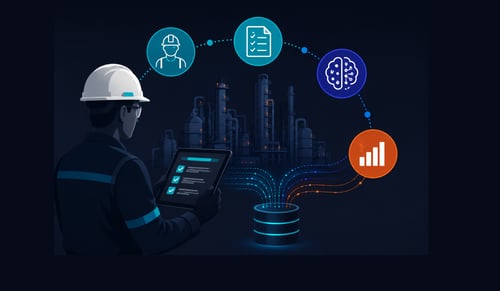
A connected worker environment emerges when procedures, systems, and workflows are aligned. It enables frontline personnel to execute with clarity, capture insights in real time, and contribute to continuous improvement. It provides leaders with visibility into execution, not just documentation.
However, this capability cannot be layered on top of fragmented procedure ecosystems. When mobility is introduced without addressing governance, it often accelerates inconsistency rather than resolving it. The result is not a connected workforce, but a digitally fragmented one.
The sequence matters. Connectivity must be built on control.
The Role of Digital Procedure Lifecycle Management
To move from static documentation to scalable execution, organizations need a system that governs the full lifecycle of procedures.
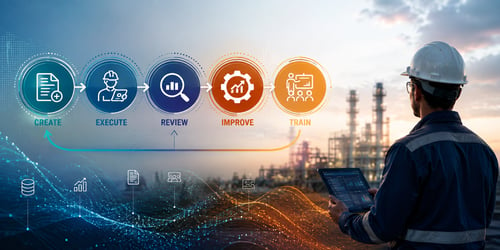
DPLM (digital procedure lifecycle management) provides that foundation. By centralizing procedures, standardizing how they are structured, and managing updates through controlled workflows, organizations establish a single source of truth. By connecting that system to frontline execution, they ensure that procedures are not only accurate, but actionable.
Most importantly, they create a closed loop where execution data and frontline feedback continuously improve procedures over time. In this model, procedures become part of operational infrastructure rather than administrative overhead.
The Strategic Implication
The ability to scale operations safely and consistently is no longer determined by workforce size or experience alone. It is determined by how effectively an organization can translate intent into execution.
Procedures sit at the center of that translation.
Organizations that continue to treat procedures as static documents will struggle to keep pace with increasing complexity. Those that transform procedures into dynamic operational assets will create a structural advantage; one that allows them to scale without compromising safety, compliance, or performance.
This is not simply a technology evolution. It is a shift in how operations are designed and sustained.
Turning Strategy Into Reality
Scaling execution requires more than digitizing procedures. It requires rethinking how procedures function across the organization.
Platforms like SmartProcedures® enable this shift by unifying procedure governance with frontline execution in a single, closed-loop system. The result is not just improved documentation, but a more controlled, consistent, and scalable operating model.
If your organization is looking to move beyond static procedures and build a foundation for scalable execution, now is the time to take a closer look.
Scaling Connected Worker technology requires more than technical readiness. Join us at the Connected Worker Energy Summit for an interactive workshop on how organizations design Connected Worker programs that scale, starting with how work is defined and governed.
Can't make it? Request a Demo